

Atal Canteen Scheme: Benefits, Eligibility, Documents, Locations and How to Get a ₹5 Meal
Delhi Urban Shelter Improvement Board
Details
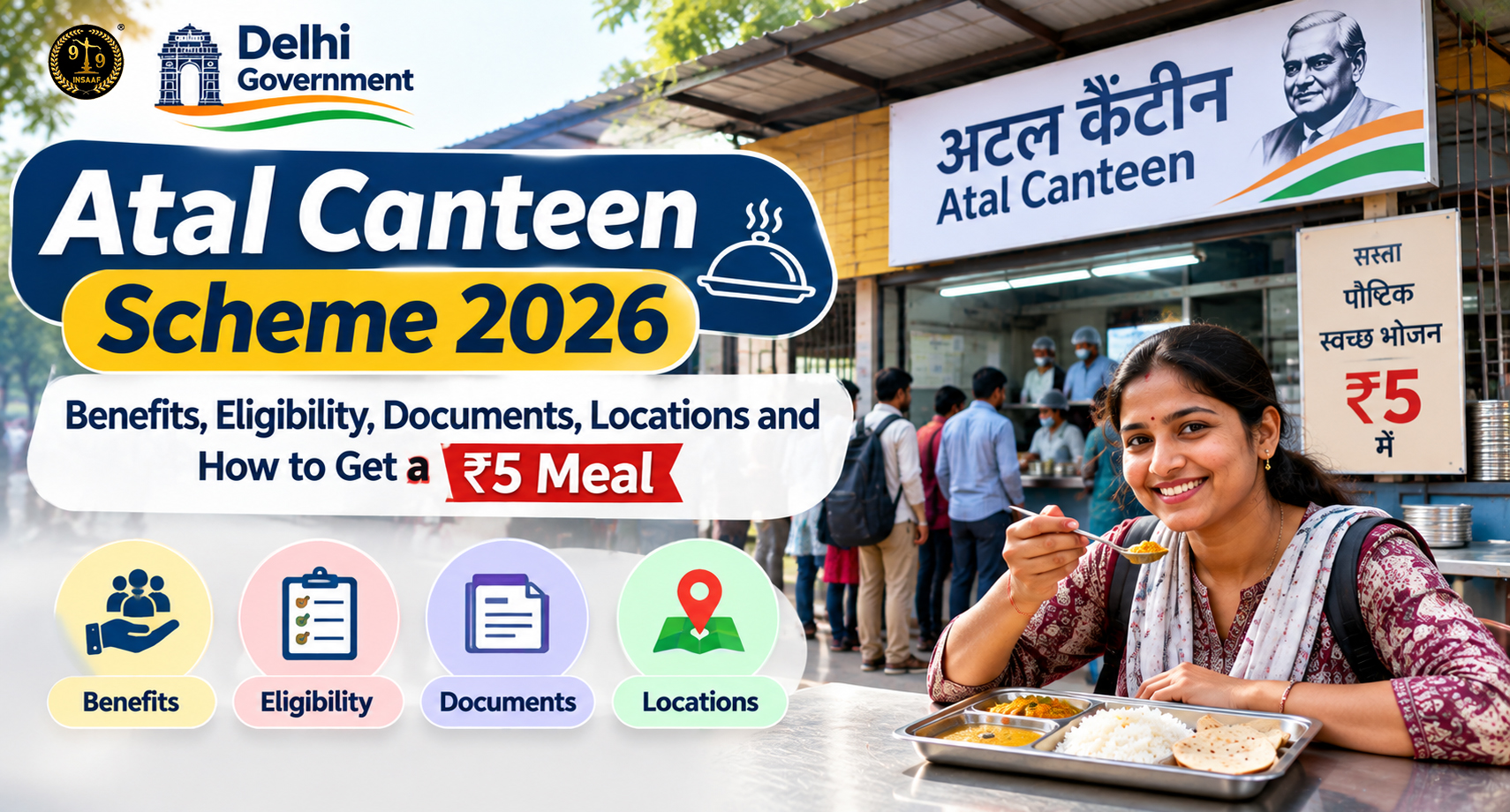
The Atal Canteen Scheme is a food welfare programme introduced by the Delhi Government on 25 December 2025, on the 101st birth anniversary of former Prime Minister Atal Bihari Vajpayee.
Under this initiative, the government provides subsidised meals for just ₹5 per plate at designated canteens in different parts of Delhi.
The scheme was initially launched with 45 canteens, with a target of establishing 100 Atal Canteens across the national capital. By August 2026, the government had announced that all 100 canteens were operational.
Each meal generally includes chapati, rice, dal, vegetables and pickle. The government provides a subsidy of ₹25 per meal, while beneficiaries pay only ₹5.
The initiative is implemented through the Delhi Urban Shelter Improvement Board (DUSIB), with the objective of supporting vulnerable communities and improving access to affordable food.
According to the Delhi Government's Economic Survey 2025–26, the scheme received a budget allocation of ₹100 crore and was designed with an initial capacity to serve approximately one lakh meals daily.
The following table highlights the major details of the scheme.
Particulars Details
Scheme Name : Atal Canteen Scheme
Launched By : Delhi Government
Launch Date : 25 December 2025
Implementing Agency : Delhi Urban Shelter Improvement Board (DUSIB)
Main Objective : Affordable and nutritious food
Meal Price : ₹5 per plate
Government Subsidy : ₹25 per meal
Total Canteens : 100
Target Beneficiaries : Poor and economically weaker sections
Meal Type : Lunch and dinner
Application Mode : Walk-in facility
Budget Allocation : ₹100 crore
State : Delhi
Official Department : DUSIB
Benefits
The Atal Canteen Scheme offers several benefits to people who need affordable and nutritious food.
1. Meals at Just ₹5
The biggest benefit is that people can get a complete meal for only ₹5. The government provides a subsidy of ₹25 per meal to make food affordable.
2. Support for Economically Weaker Sections
The scheme primarily focuses on poor families, daily wage workers, construction labourers, street vendors and people living in slum areas.
3. Nutritious and Fresh Food
Atal Canteens provide freshly prepared meals that generally include:
- Chapati or roti
- Rice
- Dal
- Seasonal vegetables
- Pickle
This food arrangement aims to provide an affordable and balanced meal.
4. Reduction in Hunger and Food Insecurity
The initiative helps people who may not have enough money to purchase regular meals. It supports food security among vulnerable communities.
5. Convenient Access Across Delhi
With 100 operational canteens announced by August 2026, people can access affordable meals at multiple locations across Delhi.
6. Support for Daily Wage Workers
Workers who spend most of their income on rent, transportation and household expenses can save money by purchasing meals at subsidised rates.
7. Improved Food Hygiene
The scheme includes monitoring arrangements such as CCTV surveillance, digital tokens and food-quality checks to improve transparency and food safety.
8. Employment Opportunities
The establishment and operation of canteens also create employment opportunities for cooks, helpers, cleaning staff and other workers.
Eligibility
Unlike many government welfare schemes, the Atal Canteen Scheme does not require beneficiaries to complete a lengthy registration process.
The scheme is primarily designed for economically weaker sections, including:
- Daily wage workers and labourers.
- People living in slum and JJ clusters.
- Construction workers.
- Rickshaw and auto drivers.
- Street vendors and small workers.
- Homeless individuals.
- Poor families.
- Students and other people who need affordable meals.
- Migrant workers living or working in Delhi.
- Other individuals looking for affordable food.
Is there any income limit?
There is no publicly specified individual income ceiling for purchasing a meal at an Atal Canteen.
Is Delhi residence proof compulsory?
No separate Delhi residence certificate or prior beneficiary registration is generally required for walk-in access.
The scheme is intended to benefit vulnerable communities, but the canteen facility is designed as an accessible subsidised meal service rather than a conventional application-based welfare scheme.
Exclusions
The Atal Canteen Scheme does not have the same type of exclusion rules as pension, scholarship or cash assistance schemes. However, some operational conditions apply.
The following situations may restrict access to a subsidised meal:
1. Multiple Meals During the Same Time Slot
Biometric verification and centralised monitoring have been introduced to prevent a person from purchasing multiple subsidised meals during the same meal slot at different canteens.
2. Meals Subject to Availability
Each canteen has a fixed meal distribution capacity. Meals may not be available once the daily quota is exhausted.
3. No Free Meals
Beneficiaries must pay the prescribed ₹5 amount for each meal. The scheme does not provide meals completely free of charge.
4. Outside Operating Hours
People visiting outside the designated lunch and dinner hours may not receive food.
5. No Cash Benefit
The scheme provides subsidised cooked meals at designated canteens. It does not provide direct cash assistance or money transfers to beneficiaries.
6. Misuse of the Facility
Individuals attempting to misuse tokens, bypass verification or obtain meals through unauthorised methods may be restricted under the canteen's operational rules.
Importantly, there is no publicly stated exclusion based on caste, religion, gender or state of origin for accessing the meal facility.
Application Process
Many people search online for the Atal Canteen Scheme application form. However, the scheme does not follow a conventional online registration or beneficiary selection process.
People can directly visit an operational Atal Canteen and purchase a subsidised meal.
Follow these steps:
Step 1: Find Your Nearest Atal Canteen
Identify the nearest operational Atal Canteen in Delhi. Choose a location that is convenient for your home or workplace.
Step 2: Visit During Meal Timings
Visit the canteen during the designated lunch or dinner hours.
Step 3: Complete the Required Verification
Follow the instructions provided by canteen staff. If Aadhaar-linked biometric verification is required, complete the prescribed process.
Step 4: Pay ₹5 at the Counter
Pay the fixed amount of ₹5 for the meal.
Step 5: Collect Your Digital Token
After payment and verification, collect the QR-based or digital token issued by the canteen.
Step 6: Collect Your Meal
Show your token at the food distribution counter and collect your meal.
Step 7: Enjoy Your Meal
You can enjoy the subsidised meal at the designated dining facility.
Note: There is no general online application form, registration fee or last date for accessing the Atal Canteen meal facility. This is a direct-access food service.
Atal Canteen Scheme: How to Find Canteen Locations in Delhi?
The Delhi Government has expanded the Atal Canteen network to 100 locations across the national capital.
These canteens are situated in different areas, including JJ clusters, resettlement colonies and other locations with significant public demand.
Some areas where Atal Canteens have been inaugurated include:
- Narela
- Bawana
- Adarsh Nagar
- Shalimar Bagh
- Wazirpur
- Timarpur
- Mangolpuri
- Rajouri Garden
- Madipur
- Vikas Puri
- Dwarka
- Najafgarh
- Palam
- Mehrauli
- R.K. Puram
- Lajpat Nagar
- Mukherjee Nagar
- Rohini
- Karawal Nagar'
- Seemapuri
For the latest operational locations, visitors should check announcements from DUSIB and the Delhi Government. Not every inaugurated location should automatically be assumed to be open at every time.
Documents Required
One of the convenient features of the Atal Canteen Scheme is that it does not involve a conventional beneficiary application requiring a complete set of documents.
Document Requirement
Aadhaar Card : Carry it for biometric verification where required
Ration Card : Not generally required
Income Certificate : Not generally required
Delhi Residence Certificate : Not generally required
Voter ID Card : Not generally required
Passport-Size Photograph : No routine requirement
Bank Passbook : Not required
Mobile Number : No general prior registration requirement
₹5 Payment : Required for each meal
Important: Atal Canteens use digital tokens and biometric verification arrangements. Aadhaar-linked verification has been reported as part of the monitoring system. Therefore, carrying your Aadhaar card is advisable. Confirm the authentication requirements at your nearest canteen.
Atal Canteen Meal Timings
Atal Canteens generally provide two meals daily: lunch and dinner.
Following the revised timings announced in April 2026, the schedule is:
Meal Timings
Lunch 10:30 AM to 2:00 PM
Dinner 6:00 PM to 9:30 PM
The service timings may vary slightly depending on the canteen and local arrangements. Visitors should confirm the timing before travelling.
Frequently Asked Questions
The Atal Canteen Scheme is a Delhi Government initiative that provides affordable and nutritious meals to people for just ₹5 per plate at designated canteens.
The scheme was launched on 25 December 2025, on the 101st birth anniversary of former Prime Minister Atal Bihari Vajpayee.
Daily wage workers, labourers, slum residents, street vendors, rickshaw drivers, homeless people, students and other individuals can access the subsidised meals.
One meal costs ₹5 per plate. The Delhi Government provides a subsidy of ₹25 per meal.
Aadhaar-linked biometric verification has been introduced at canteens. Visitors should carry their Aadhaar card and follow the verification requirements at their nearest outlet.
No. There is no general online beneficiary registration process. People can directly visit an operational Atal Canteen during meal hours.
The Delhi Government announced that all 100 planned Atal Canteens were operational by August 2026.
The meal generally includes roti, rice, dal, seasonal vegetables and pickle.
The revised general timings are:
• Lunch: 10:30 AM to 2:00 PM.
• Dinner: 6:00 PM to 9:30 PM.
Timings can vary according to individual canteen arrangements.
The scheme is intended to support vulnerable communities in Delhi. It does not generally require a Delhi residence certificate for walk-in meal access.
No. A ration card is not generally required to purchase a subsidised meal.
Lunch and dinner are separate meal slots. Biometric monitoring is used to restrict multiple subsidised meals during the same slot.
The Delhi Government allocated ₹100 crore for the scheme in the 2025–26 budget.
You can check Delhi Government and DUSIB announcements for canteen locations and operational updates.
No. Beneficiaries pay ₹5 per plate, while the government subsidies the remaining cost.
Sources And References
For accurate information and government updates, readers should refer to the following sources:
- Delhi Government Economic Survey 2025–26: Official Economic Survey PDF – Scheme objectives, budget and implementation details.
- Delhi Urban Shelter Improvement Board (DUSIB): DUSIB Official Website – Implementing agency and shelter-related information.
- Government of Delhi: Delhi Government Official Portal – Government announcements and public welfare updates.
Disclaimer: The information provided herein is for educational and informational purposes only and is updated as of 02 November 2026. Applicants are advised to verify the latest updates regarding the terms and conditions, eligibility criteria, and documents required under the Atal Canteen Scheme from the relevant official sources before submitting an application. The information provided should not be construed as a guarantee of eligibility or approval under the Scheme.