
Online Legal Advice from Insaaf99® Online Lawyer Consultation in India
Online Legal Advice from Insaaf99® Online Lawyer Consultation in India
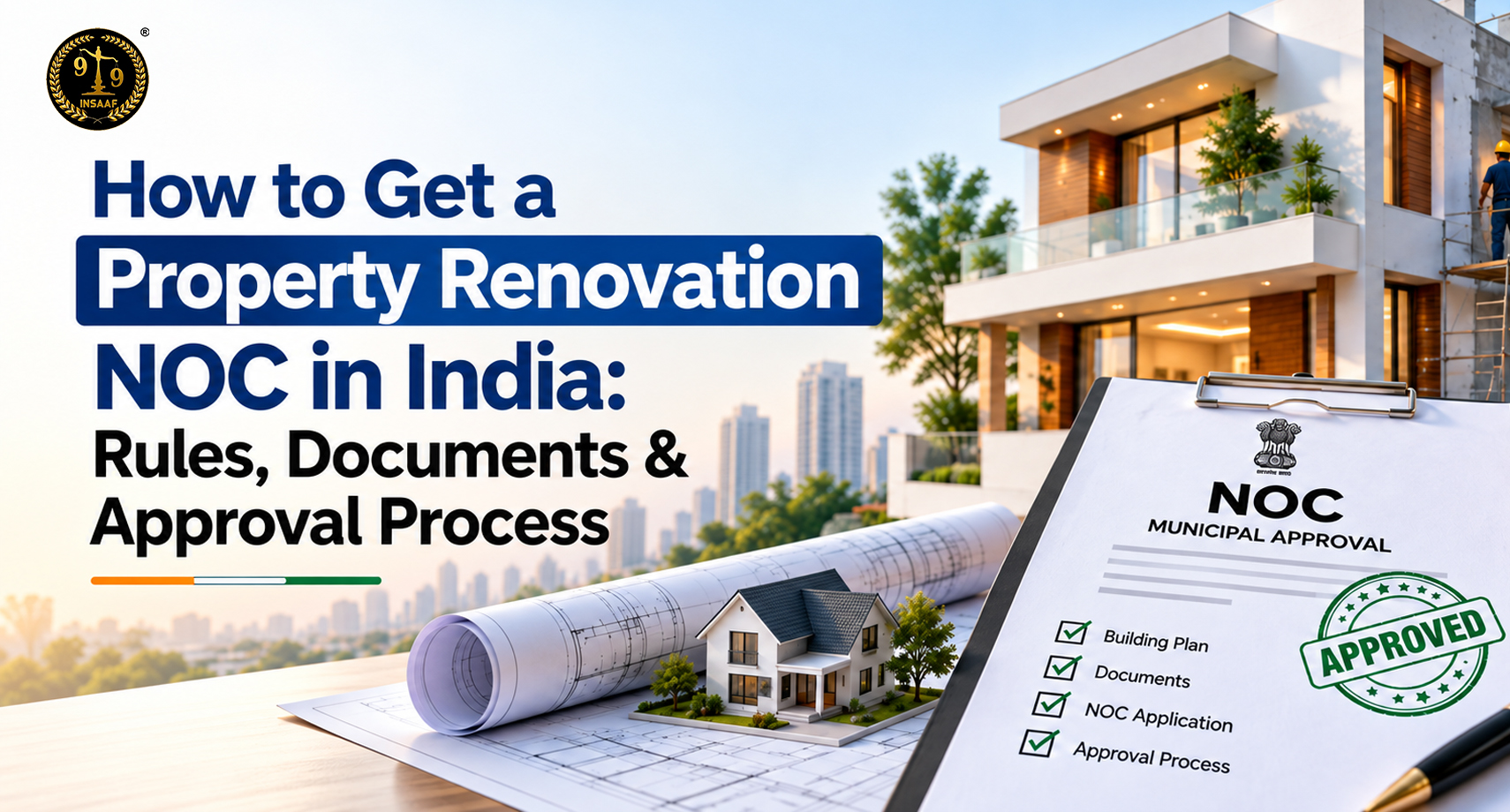
A No Objection Certificate (NOC) for a property renovation is a written document stating that a society or authority does not object to the work that you intend to do. The answer is: it’s not for everyone and it’s not for every job – it depends on the nature of the job, the type of property and any local rules and bye-laws in your society.
In India, there are two ways of getting approval for renovation: your housing society or Resident Welfare Association (RWA), and in some cases, a government body. A simple repainting job does not usually cause any concerns. Walls can be removed, building extended or change in use can impact structural safety, common areas or approved plans, building renovation permission may be required.
Cosmetic work, e.g. painting, changing floor finishes, etc., requires only a note to the society. If there are significant changes, it is more likely that formal permission will be needed, such as:
Not all renovations require a municipal NOC and not all minor repairs are exempt. Check the city / authority in India before commencing with property renovation rules.
Also Read :- DPDP Act 2023
The renovation procedures in housing societies vary, but are broadly as follows:
Read the bye-laws: Review renovation schedules, what can be renovated, collection of debris, use of lifts and access for contractors.
Societies do not all follow identical procedures. Also, managing committee approval does not replace statutory permission where the law requires it. A society NOC speaks to your society’s rules, not to municipal or structural compliance.
Where work is not confined to internal finishing (e.g. major changes to the structure, changes to plans approved by the government, some commercial buildings, or property close to protected monuments or railway land) government approval is relevant. These bodies have different roles:
The Building Corporation or Local Building Authority: Usually responsible for building approvals and approved plans, depending on the locality.
Delhi Development Authority (DDA): Applies only in areas under its jurisdiction and control.
National Monuments Authority (NMA): works only in the areas around centrally protected monuments, on the basis of the applicable framework.
Other bodies: development, railway or specialised authorities may be involved depending on location and work.
The right authority depends on where the property is, which law applies, how the land was developed or is owned, and what exactly you plan to do. Confirm this with the authority itself or a qualified professional.
Maintaining a balance between society NOC and municipal approval is crucial. There are key differences between society NOC and municipal approval.
An NOC is established by the bye-laws of the society and administers the rules of the society in the building including timings, debris and common areas. Approval to the structural safety and building plans and land use from the municipal or authority. Both may be required for larger projects. For example, in Delhi, a flat developed by the DDA might include both DDA requirements and society requirements, and another flat close to a monument that is protected by the NMA might also include NMA requirements.
The municipal renovation permission is part of the Building NOC Application Process. The Building NOC Application Process includes the municipal renovation permission.
Step-by-Step Process for Municipal Renovation Permission
Procedures differ by authority and project, and not every application follows every step. In general, the process looks like this:
Commonly requested by housing societies:
More likely to be requested by government authorities:
Mistakes to Avoid
Also Read :- Bonafide Certificate
Renovation approvals can raise questions that general information cannot answer. Does your plan need more than society's consent? What should you do if society refuses permission? Insaaf99 is a platform that connects users with independent legal professionals. You can explore it to find a professional who may help you review your documents, understand which approvals apply to your property, or advise on a dispute with a society. Insaaf99 is not a law firm and does not itself provide legal advice online.
Conclusion:
Property renovation NOC involves determining who to contact, reviewing your society's regulations, filling out the necessary paperwork, and getting written approval, if needed. The approval of the society and statutory approval are different and cannot be used to replace each other. It is imperative to check with your society and the relevant local authority before starting.
For assistance in your case, visit Insaaf99 to get in touch with independent legal specialists.
FAQs
Q1: Is an NOC mandatory for flat renovation in India?
Ans: Societies have written permission by their bye laws and some work must have statutory approval. Always review the rules and regulations of your society first.
Q2: Can I renovate my apartment without society permission?
Ans: Prior approval is required for many bye-laws, particularly, structural and common area works. Without it, there may be penalties or work stoppage.
Q3: What documents are required for a flat renovation NOC?
Ans: Normally societies require proof of ownership, proof of identity, a written application, contractor information and maintenance clearance.
Q4: Who grants permission for structural alterations?
Ans: The local or municipal building authority or a local or specialist body (may be a development authority or building authority) depending on location.
Q5: What if my housing society refuses renovation permission?
Ans: Request written reasons, read the bye-laws, and try to propose changes to your proposal or try the society grievance process. If the dispute is a disagreement, seek the advice of an impartial legal representative.